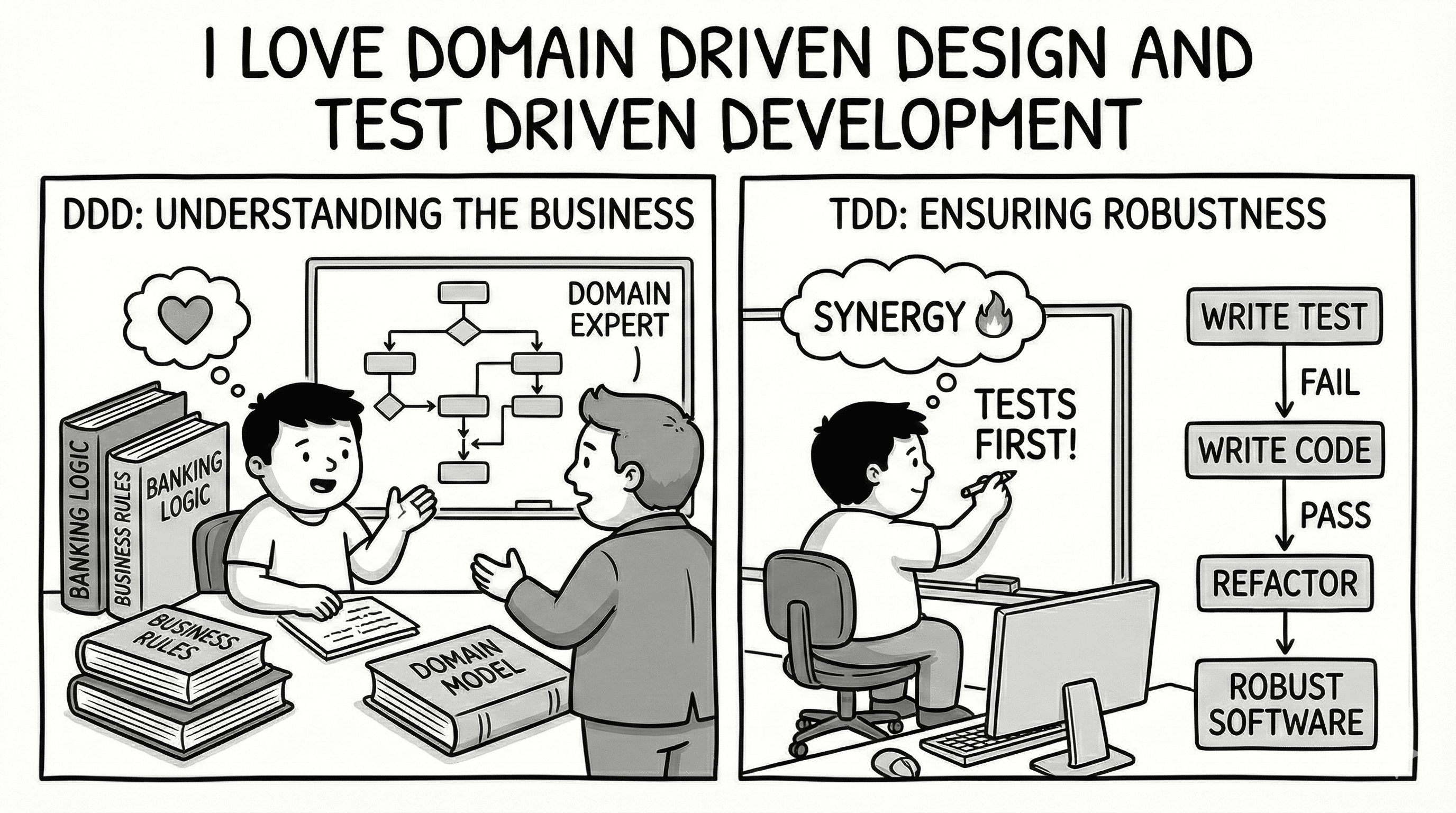
As a software architect and engineer who has been in the industry for several years, I really love the concept of Domain Driven Design (DDD) it helps me alot in building complex software that requires deep understanding of the business domain.
Don't get me wrong 80% of software engineering is not about how you implement a system that's fancy with all the latest technologies. Kubernetes, microservices, serverless, etc. that helps your system handle 100k request per second. But it's actually finding out what your client really needs for their business and how you can understanding their domain deeply. (not gonna lie it's so damn hard. especially when you're working with boomer clients who think that a website is just a "digital brochure")
And as Eric Evans said in his book Domain Driven Design:
"You cannot expect to build a banking application without understanding how banking works" - Eric Evans, Domain Driven Design
With DDD, by focusing on the core domain and its logic, DDD allows me to create software that is functional and aligns with business goals.
The Twist 🤔
However, maintaing DDD is really challenging without proper testing. This is where Test Driven Development (TDD) comes into play. TDD is a software development approach that emphasizes writing tests before writing the actual code.
With TDD i can ensure that the code i write is testable and maintainable. Not only that, with TDD also helps me to perfect my understanding of the domain first by catching any ambiguity by expecting behaviours that should be exhibited.
The Synergy 🔥
When DDD and TDD are combined, they create a powerful synergy that enhances the software development process. By writing tests first, I can ensure that the code I write adheres the domain logic and of course behaves as expected.
How To Implement It? 🧑💻
️Don't get me wrong, understanding how to implement DDD and TDD together is not easy. It took me quite a while to get the hang of it, but here are some tips that helped me along the way:
- Start with a clear understanding of the domain 🧑💼: Before writing any code, make sure you have a deep understanding of the business domain and its logic.
- Create a list of behaviours 📋: Identify the key behaviours that the domain should exhibit and write tests for them first.
- Always refactor 🔄: As you write code, always look for opportunities to refactor and improve the design of your code.
- Collaborate with domain experts 🤝: Work closely with domain experts to ensure that your understanding of the domain is accurate and up-to-date.
Conclusion 🎯
In conclusion, the combination of Domain Driven Design and Test Driven Development is a powerful approach to building robust software. By focusing on the core domain and writing tests first, I can ensure that the code I write is maintainable, testable, and aligns with business goals.
So, if you're looking to build complex software that meets the needs of your clients, I highly recommend giving DDD and TDD a try. Trust me, you won't regret it!